

We LOVE to see the kids in our lives happy and healthy, but let’s be real…kids get stressed, anxious, worried, or overwhelmed, like these youngsters:
Aidan
He’s a tired 7-year-old boy, just home from a busy day at school. He’s a little sleepy and a little hungry. He asked to play with blocks when he got home and his mom helped him get them out. Suddenly, he growls “argh!!!!” and a block tower goes tumbling to the ground. “It’s not working!!” he says with tears in his eyes and frustration in his voice. A block bangs off the wall, thrown by this frustrated little guy.
Julia
She’s an 8-year-old girl, and is anxious about her science test. She thinks she’s going to fail. She worries that her parents will be disappointed in her and she’ll lose her privileges of playing with friends and screen time. She studies and studies, but as soon as the test is in front of her, her mind goes blank. Her palms sweat and her cheeks flush. “Why can’t I remember?!” she thinks to herself.
Paul
He’s 10 and his parents are getting a divorce. “Why did it have to change?” he wonders. “I hate changing houses. I always forget something!” He misses how it used to be. “What will happen to me?” His parents keep asking him to talk, but he doesn’t want to.
Isabelle
She’s 11 and very worried about her sick grandma. In the middle of her math class, her mind wanders to her grandma. She went to visit her this past weekend. She’s concerned about her grandma’s surgery. “I hope the surgery goes okay. I wonder when grandma will be home?”

What strategies work to help kids cope?
When I’m working with kids, I love to explore lots of different types of coping skills that they might like and use, including:
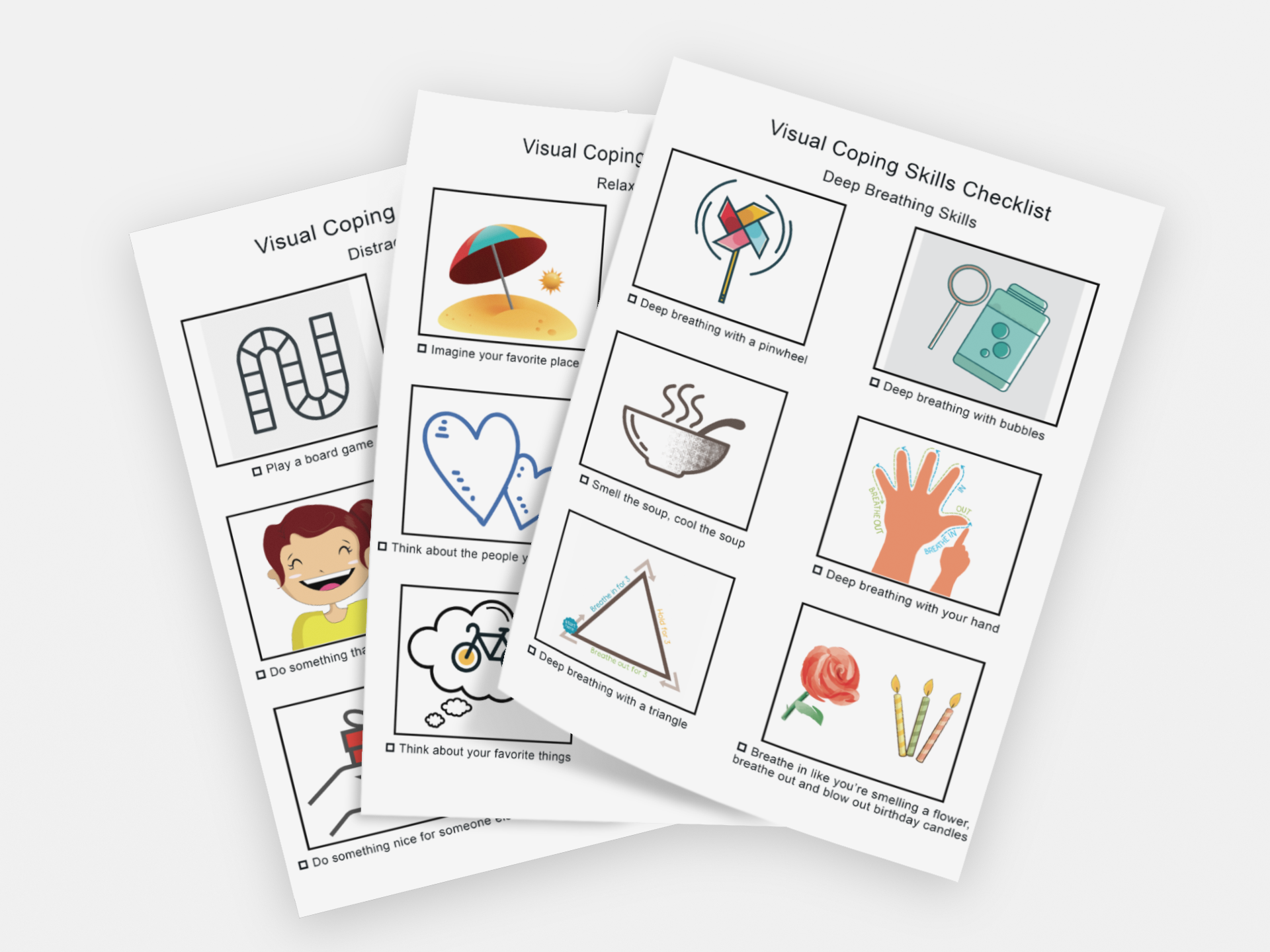
Deep Breathing
There are so many different ways to take deep breaths!
Use a stuffed animal to practice deep breathing
Have your child lay down on their back and put a stuffed animal on their belly. Have them breathe in and move the stuffed animal up, then breathe out and bring the stuffed animal back down. This helps teach kids to use their belly to take big deep breaths. Another alternative is to use a weighted stuffed animal.
Relaxation
Calming activities like taking mindful moments, using grounding techniques, or using their imagination to help kids relax their minds and bodies.
Imagine Your Favorite Place
Imagine your most favorite, calming place. It could be a beach, a garden, or in nature, even on stage. Take a few minutes and really think about what it would be like to be there. What is around you? What’s under your feet? What do you smell? What do you hear? How warm or cool is it? Really think deeply about all of those senses, and imagine you are there for a few minutes. What's your favorite place?
Distraction
Playful and fun activities to give their brains a break
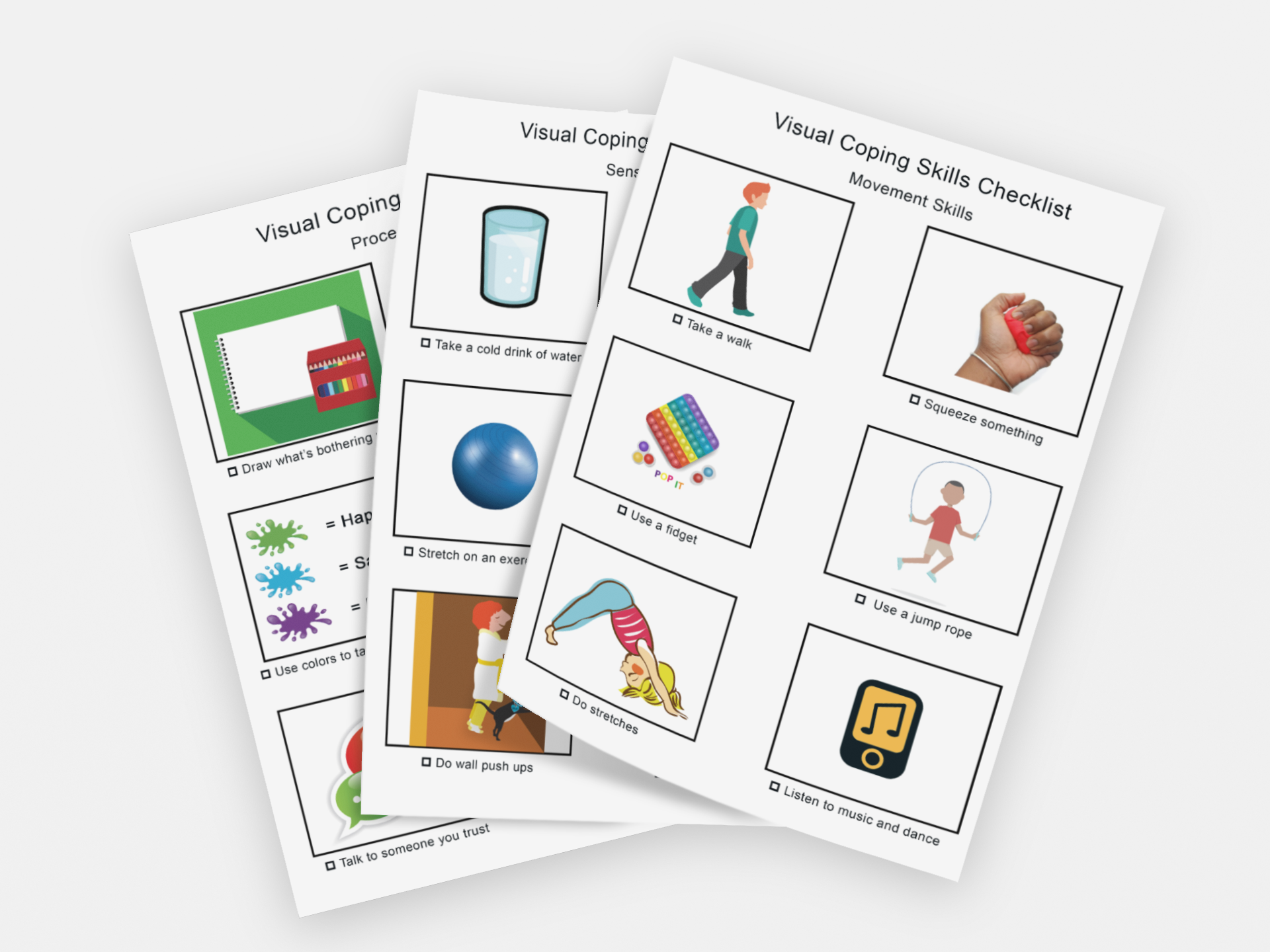
Listen to Music
Sometimes, it's good to take a little music break. You can put on a song and dance, sing along to the music, or lie down and listen to the words or melody.
What kind of music do you like to listen to? Do you like music with someone singing or prefer songs with instruments only? Do you enjoy fast songs or slow songs? Do you want to listen to a song that gives you energy or helps you calm down?
Movement
Strategies that involve moving their bodies in small and big ways
Wall Push-Ups
Wall push ups are a quick body break you can use at home or at school. This is great way if you’ve been sitting for a while and just want to move your body. Find a space that is clear around your feet, and set a number of wall push ups to do - like 5 or 10. Check in and see how you feel, then do a few more if you need to.
Sensory
Ideas for using their senses to relax and de-stress
Wrap up in a soft blanket
Wrapping up in a soft blanket can help you when you feel stressed, overwhelmed, or anxious. You can take a break, and feel better by wrapping yourself up in a blanket and taking a rest. What sort of blankets do you like - soft and fluffy? Or heavier blankets? Or blankets that are light? Try a few different blankets and see what you like the best.
Processing
Strategies focused on exploring a child’s thoughts, feelings, and behaviors. These skills help kids examine what’s happening, and making plans to help manage overwhelming situations in the future.
One good thing
So often, it’s easy to focus on things that have gone wrong. This coping skill is to help you focus and find the good in every day and identify things that you are grateful for.
Take time during the day to identify something good. It could be something big; that you made it through your class presentation even though you were nervous. Or it could be something small, like you got a huge hug from your brother after school.

How can we help them use these skills in the moment?
There are several things we can do to help kids use strategies in the moment. For example, we can:
Create visual reminders to help remind them of the strategies that work for them
Make a plan before anything happens or escalates
Debrief after something happens - review and tweak the plan
Create a calm area or space where kids can use coping skills
Have an ‘on-the-go’ calm down kit with strategies available wherever you are
I talk about this on episode 137 of the Calm and Connected Podcast. Listen to the episode to hear more about what you can do to help kids!

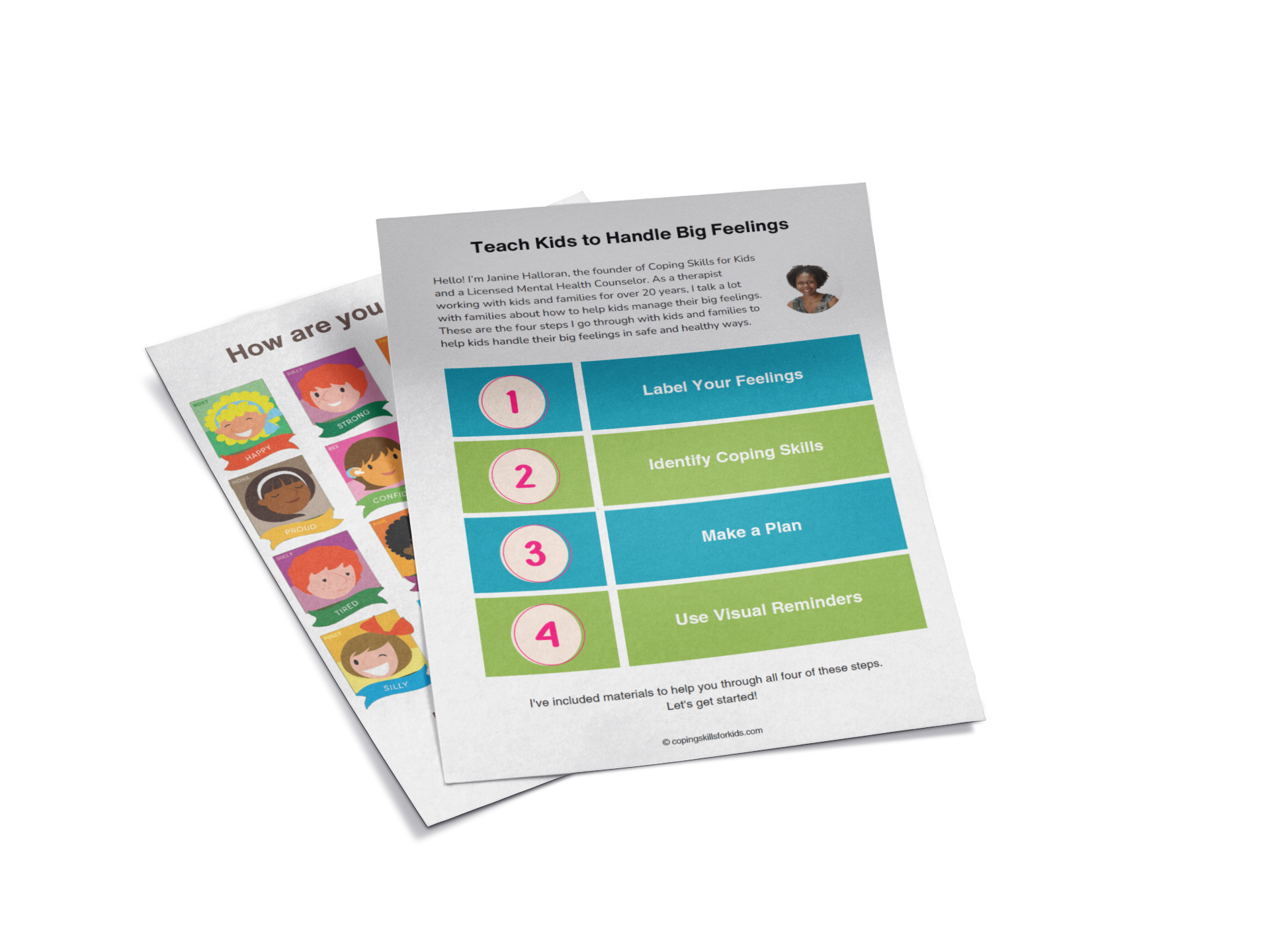
Help Kids Handle Big Feelings Download
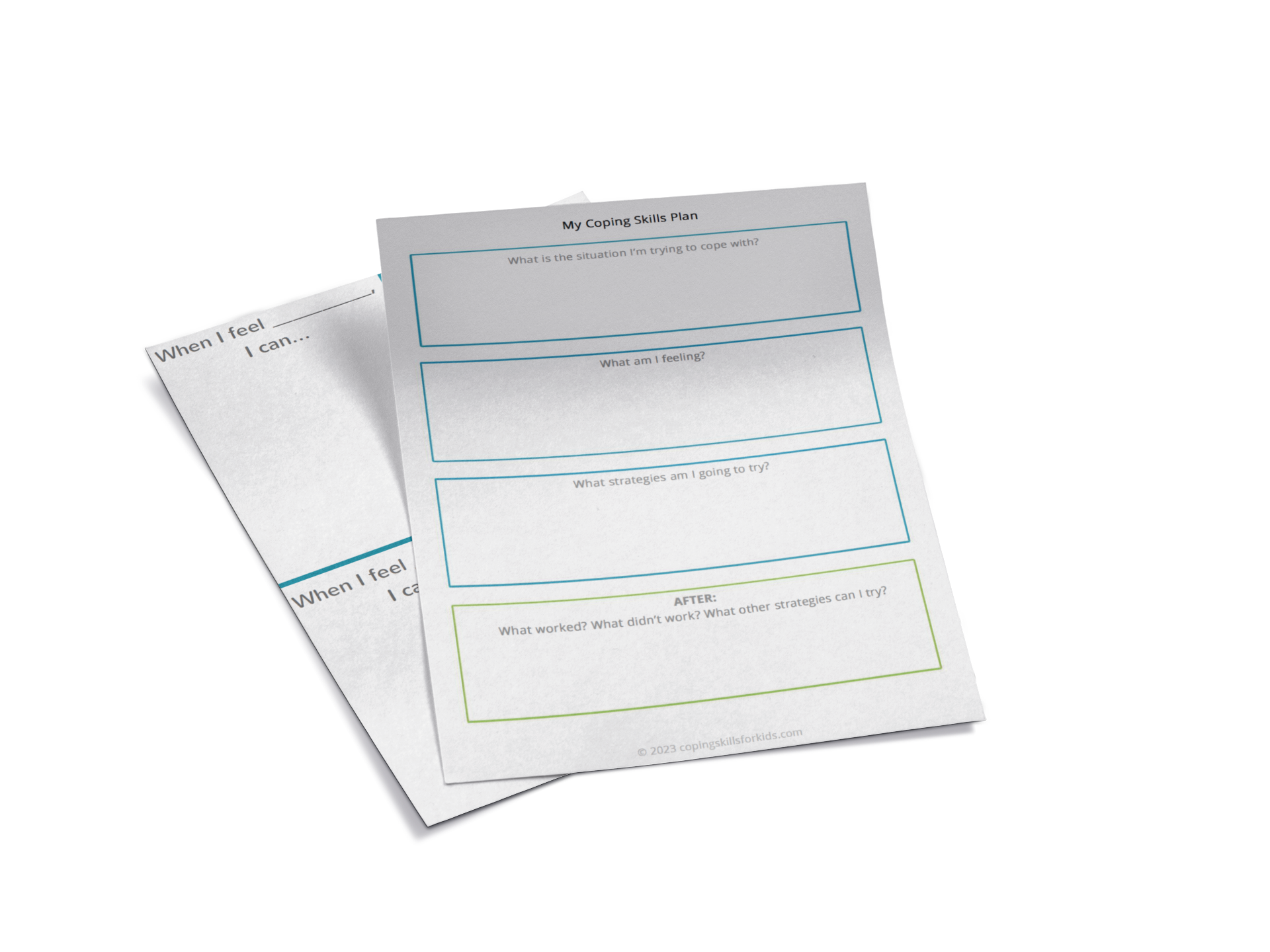
Sign up for our newsletter and you’ll get a free four step plan to teach kids how to handle their big feelings with all the printable resources you’ll need, including:
Feeling Faces Check-In
Visual Coping Skills Checklist
My Coping Skills Plan
Create Your Own Cue Cards
I’m not sure where to begin. What can I do?
There are lots of free resources over at copingskillsforkids.com.
If you want to purchase workbooks, journals, activity books, card decks, printables, and posters to help teach coping skills, visit store.copingskillsforkids.com.
If you want more detailed support, like classes, webinars, and direct support from me, join the Coping Skills Hub.
Resources for Kids at the Coping Skills for Kids Store
Get support in the Coping Skills Hub
The Coping Skills Hub helps everyone find and use their coping skills.
In the Hub, you will find…
Monthly Challenges & Opportunities for Connection - Different challenges every month to help you and your children playfully explore coping skills. Answer connection questions, and participate in live events to connect to others in the community.
250+ coping strategies for everyone - Organized by coping style, each strategy has a visual to encourage using strategies in the moment, when skills are needed. Perfect for personalizing a reset space or on the go toolkit!
A simple 5 step process to teach kids coping skills - from connecting with kids to practicing and reviewing strategies so that kids use them when they need them!
40+ audio practice lessons to make it easier for kids, teens, and adults to explore and practice coping skills
Video library of webinars, classes, and mini expert lessons to expand your learning on topics like anxiety, anger, sensory, connection activities, screen time, mindfulness, friendship and more, all available on demand
On-demand courses like Create Coping Skills Champions and Coping Skills for Teens with Anxiety, created to help you explore strategies in an organized way
The best way to learn anything is through play, so there’s a whole section on Games and Activities to playfully explore feelings and practice coping skills
All the resources you need to create a personalized toolkit for your child or teen and set up your home to encourage kids to use coping skills when they need them
Coping Skills for Adults - an area where we as adults can explore and grow our own strategies, so we can role model using strategies, and create our own mental wellness plan.
Resources for Mental Health Professionals - Lesson Plans, Treatment Plan Templates, and pre- and post-tests to make it easier to use these coping skills with individual clients or in groups.
Expert consultation and personalized support - Unlike generic online resources, Hub members get direct access to a Licensed Counselor for one-on-one guidance and personalized strategies that fit your specific needs
available on iOS and Android as well, so you can use the Hub wherever you are
New resources are added monthly!
Get more information about the Hub
New resources are added monthly!